One of the questions I get asked most often is a surprisingly simple one: should you slackline with or without shoes? Watch different athletes and you’ll see both. Some walk barefoot, some never take their shoes off. So what’s actually better?
After years on the line, my honest answer is: it depends. But that doesn’t mean there are no useful guidelines. Here’s how I think about it.
For beginners: start barefoot
If you’re just starting out, I’d recommend going barefoot. The reason is feeling. Barefoot, you get direct feedback from the line under your feet, and that connection helps you learn balance much faster. You feel every movement of the webbing and your body learns to react to it.
If barefoot isn’t comfortable for you, the next best thing is a pair of barefoot shoes or shoes with a very thin sole. The key in the beginning is to keep that sensitivity to the line, not to cushion it away.
Why I usually wear shoes myself
If barefoot is so good for feeling the line, why do you see me wearing shoes most of the time? It’s not just style.
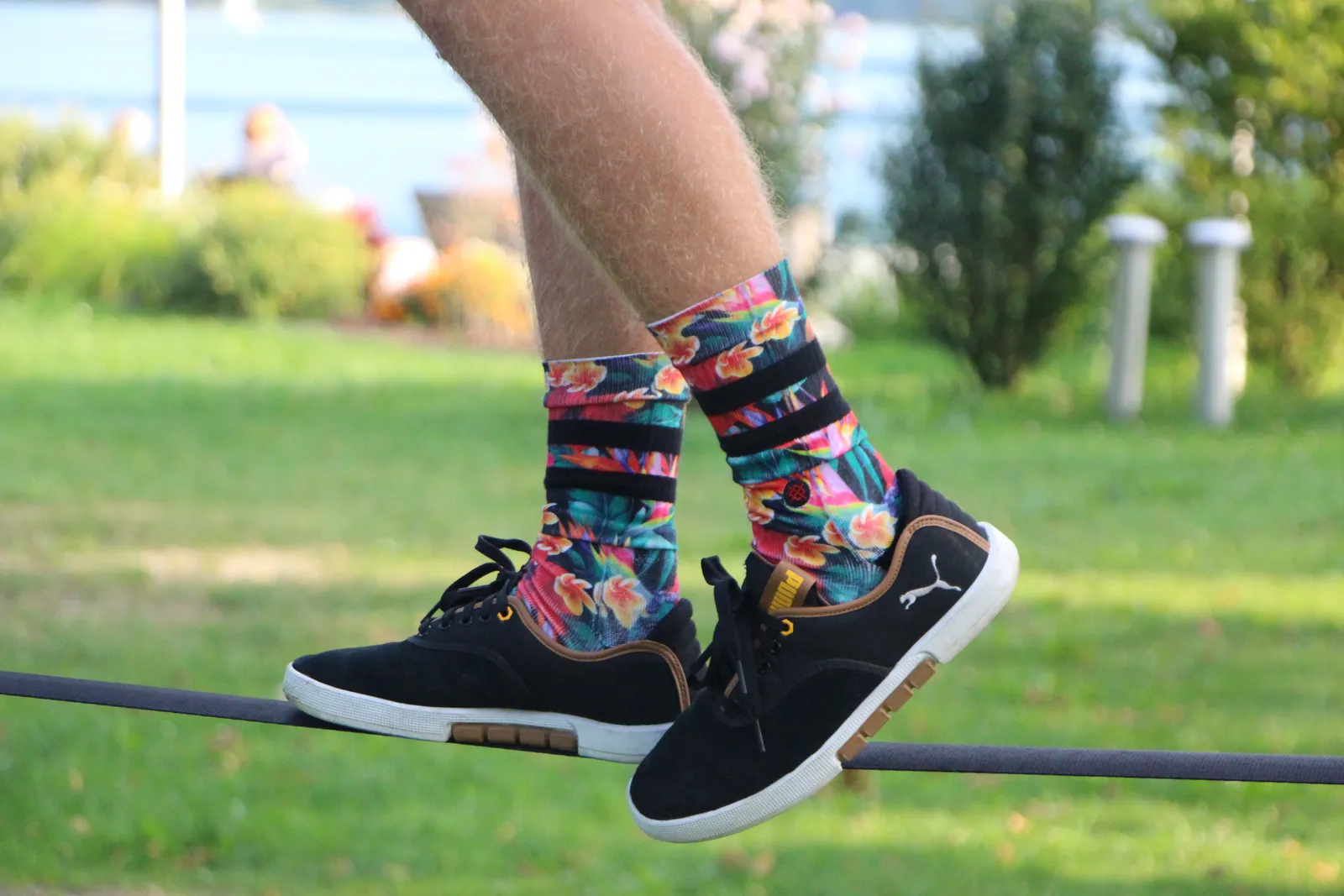
The main reason is tricklining – the jumping and, above all, the landing. When I land tricks back onto my feet, shoes give me better grip on the webbing and make toe injuries far less likely. On a taut trickline with a lot of dynamic movement, that protection and grip matter.
My preference is a shoe with a rather thin sole and not much profile – skate shoes are a good example. You still want to feel the line as much as possible, just with a bit more grip and protection than bare skin gives you. It’s a personal choice, and a lot of it comes down to what you’re used to.
Highlining: back to barefoot
Interestingly, for highlining I still walk barefoot most of the time, or in barefoot shoes. Up there it’s all about feeling, and I want maximum connection to the line. Bare feet also mean less weight, and honestly, it’s simply what I’m used to for highlining.
So even for me, the answer changes depending on the discipline.
The rule of thumb
In the end there’s no right or wrong here – it depends on the discipline, on your level, and on personal preference. But if you want a simple guideline to start from:
- Beginners: barefoot (or thin-soled / barefoot shoes)
- Highlining: barefoot
- Tricklining: shoes (thin sole, little profile)
The best way to figure out your own preference is simply to get on the line and try both. If you want to learn the basics properly, that’s exactly what we do in my slackline workshops – and if you’re new to the sport, start with what slacklining actually is.