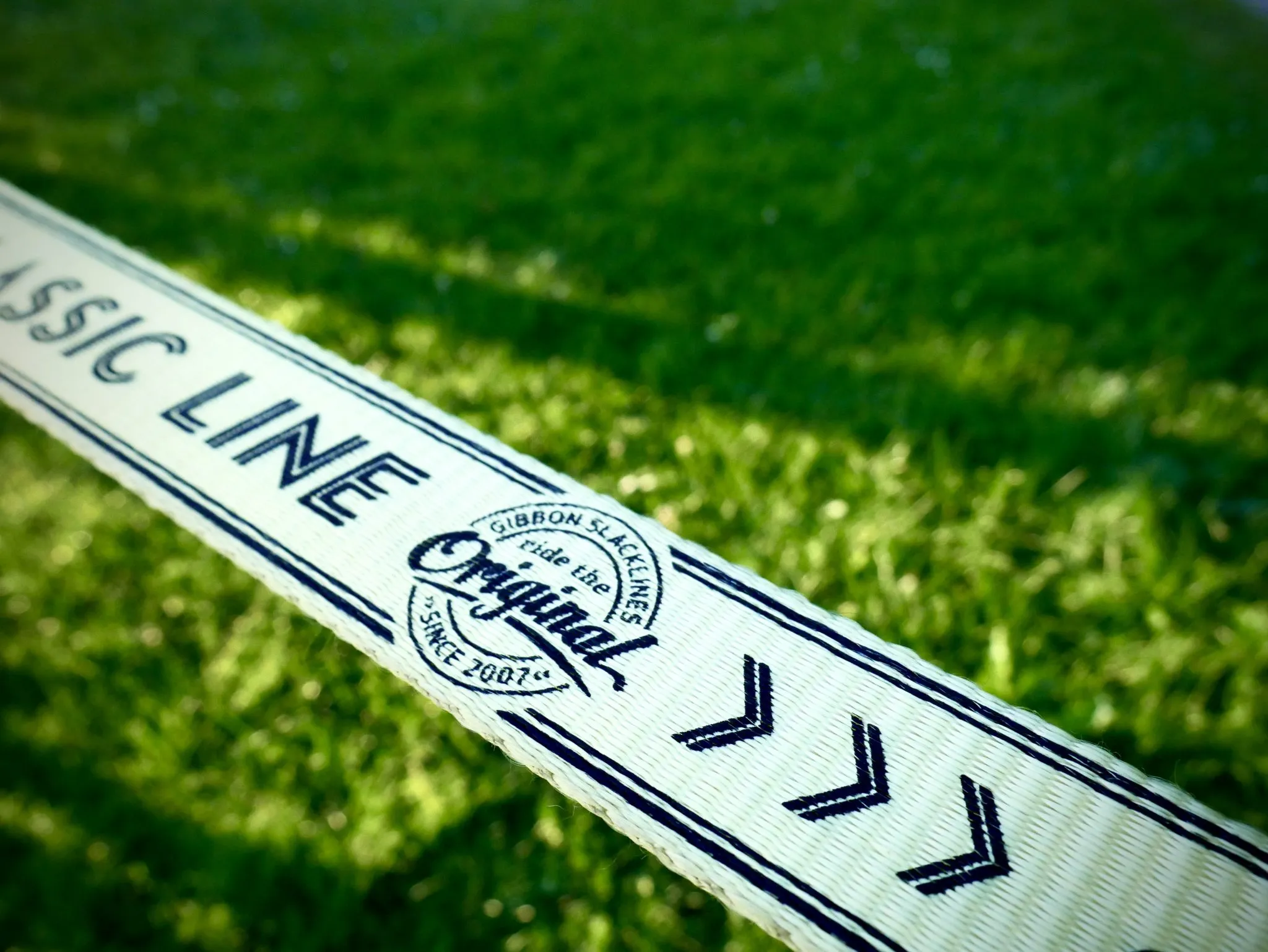
Imagine balancing on a narrow strip of polyester webbing – stretched between two trees, a rock face, or two skyscrapers. The band swings, bounces, and responds to every tiny shift in weight. That’s slacklining.
At its core, slacklining is straightforward: an elastic textile band (the webbing) is rigged between two anchor points, and you try to balance on it – or do far more than that. What began as a pastime in the climbing meadows of Yosemite has grown into a serious sport with several fascinating disciplines, ranging from street performance to extreme high-altitude traverses.
The Disciplines
Tricklining – Acrobatics on the Band
Tricklining is the most spectacular and performance-oriented discipline in slacklining. On a relatively taut line, athletes execute jumps, spins, seated elements, lying positions, and complex combinations – similar to trampolining, but on a narrow band only a few centimetres wide.
A typical trickline doesn’t hang very high off the ground, which lets athletes train at full intensity without the psychological barrier of serious height. Tricks like the chest bounce, 360° rotation, and backflip are part of the modern repertoire for advanced trickliners.
Tricklining is the show discipline par excellence. In front of an audience it truly comes alive: the band bounces visibly, the tricks are dynamic, and the choreography syncs perfectly with music. Moritz Purer has made tricklining the centerpiece of his professional show performances.
Highlining – Balance at Breathtaking Heights
Highlining is slacklining at great heights – rigged between mountain peaks, over canyons, or along cliff faces. The drop can range from a few metres to several hundred metres.
What makes highlining so unique is its mental dimension. Technically it’s barely different from regular slacklining, but the psychological weight of the exposure changes everything. Every step demands total concentration, breath control, and mental strength. Highlines are equipped with a safety leash attached to the athlete’s harness – but a fall above that kind of depth is still an intense experience.
In the show world, highlining works brilliantly for outdoor events where the breathtaking backdrop becomes part of the overall spectacle.
Longlining – Meditation Over Long Distances
Longlining is all about distance. Longlines span dozens to several hundred metres and are typically rigged very close to the ground. The challenge isn’t height but length: the longer the band, the more it oscillates and sways, and the more focus each step requires.
Longlining is the most meditative discipline. It’s less about tricks and more about steady, controlled forward motion – a kind of moving meditation that trains balance, coordination, and patience. World records are regularly set on lines stretching several kilometres.
Waterlining – Balancing Over Water
Waterlining combines slacklining with the element of water. The band is rigged over a lake, river, or sea – low enough that a fall ends in water, not on solid ground.
What looks spectacular in photos is even more impressive in person: the water mirrors the athlete’s silhouette, tricks appear doubly dramatic through the reflection, and the inevitable splash is part of the experience. Moritz Purer regularly uses waterlining as a show format – whether at outdoor festivals by the lake or as part of a multi-act show programme.
Slacklining as a Show Format
All these disciplines share one thing: they captivate audiences. Whether it’s a spectacular backflip on the trickline, the quiet drama of a highliner suspended high above a festival site, or the aesthetic imagery of a waterlining performance at sunset – slacklining works as performance art on a level all its own.
Moritz Purer combines all disciplines into bespoke show formats for corporate events, festivals, galas, and productions. Every performance is individually tailored to the occasion: stage, music, lighting, atmosphere – everything fits together.